International Union
of Journalists and Writers
Our details Join us

International Congress Shield – Hate Speech: A Rising Global Threat and the Need for Collective Action
533617889_24286107324377014_1003732412362364174_n

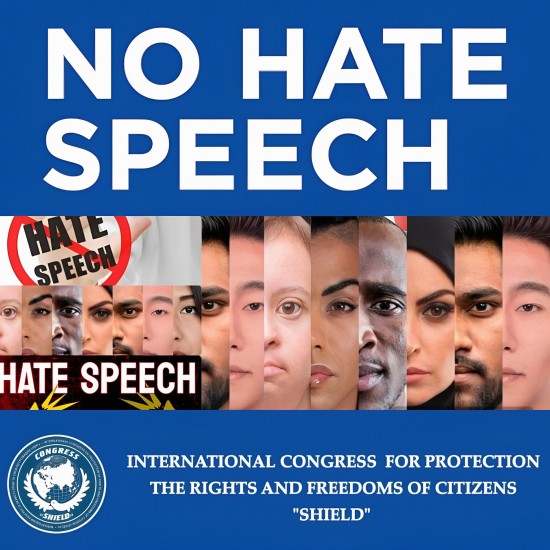
Hate speech is on the rise across the world. It is no longer limited to hurtful words or hostile attitudes; it has become a deliberate behavior that incites violence, undermines diversity and social cohesion, and threatens the shared values and principles that bind communities together. A hate crime is defined as a criminal act motivated, in whole or in part, by bias against a person or group based on race, religion, gender, sexual orientation, or gender identity, and it represents a direct threat to human rights.

The causes of this phenomenon are varied. They include ignorance and lack of awareness of human rights, political polarization that uses hatred as a mobilizing tool, and economic and social tensions that push some to seek a “scapegoat.” Added to this are weak or insufficient laws to criminalize incitement, as well as the negative role played by certain media outlets in spreading inflammatory content. Extremist or racist forces also benefit from fueling division to achieve political, ideological, or even economic gains.

The spread of hate speech both online and offline erodes fundamental freedoms, insults and marginalizes targeted individuals and communities, and creates fertile ground for hate crimes. This is why international instruments and conventions have sought to address it, such as the International Convention on the Elimination of All Forms of Racial Discrimination, which prohibits “propaganda” and “dissemination of ideas” based on racial superiority or discrimination, obliging states to prevent and punish such acts. Likewise, the Rome Statute of the International Criminal Court holds criminally responsible anyone who directly and publicly incites genocide.

Combating hate speech does not mean restricting freedom of expression; rather, it means preventing it from escalating into incitement to discrimination, hostility, and violence, which is prohibited under international law. The role of authorities and governments is crucial—enacting and enforcing strict laws, monitoring media content within a framework that balances freedom and responsibility, supporting community initiatives to promote a culture of tolerance, and strengthening international cooperation to pursue instigators of hate across borders.

If confronted with an incident of hate, it is essential to report it to the competent authorities and provide detailed information, as impunity encourages repetition and undermines the rule of law.

The International Shield Organization plays a pivotal role in this fight—raising collective awareness through media and educational campaigns, organizing training for journalists, activists, and educators on monitoring and countering hate speech, advocating with decision-makers for stronger policies and laws, fostering solidarity among diverse community groups, and documenting violations with precision to present to national and international bodies.

Addressing hate speech is a shared responsibility that requires collective awareness and close cooperation between individuals, civil society, and authorities to ensure that public spaces—both physical and digital—remain arenas for connection and understanding, not platforms for division and incitement.

International Shield Organization – Belgium 

14 August 2025