I ask to accept me in members of the International Union of Journalists and writers.
In accordance to the Law of Ukraine «About Protection of Personal Information » I consent to the processing of your personal information.
The Balfour Declaration and Its Impact on the Indigenous Palestinian Population
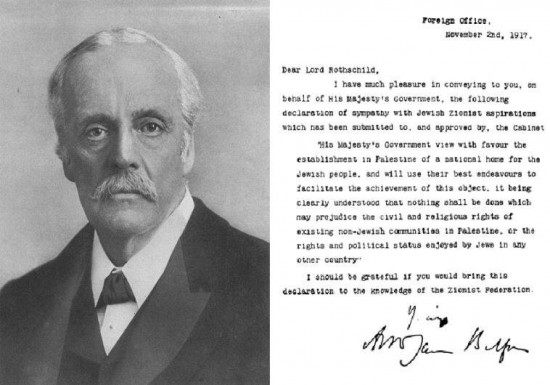
On November 2, 1917, the British government issued the “Balfour Declaration,” a statement by Foreign Secretary Arthur Balfour expressing Britain’s support for the establishment of a “national home for the Jewish people” in Palestine. Far from being merely a political statement, the declaration had significant and lasting effects on the Palestinian people and the region’s history. This promise became a catalyst for events that continue to fuel the Israeli-Palestinian conflict to this day.
Background and Motives Behind the Balfour Declaration
Before the Balfour Declaration, Palestine was part of the Ottoman Empire, with an overwhelming majority of its population being Arab Palestinians. When Britain gained control of Palestine during World War I, various political and economic motives led it to support the Zionist movement, hoping for the strategic and economic benefits of a Jewish presence in Palestine.
Legal and Ethical Issues of the Declaration
The Balfour Declaration was controversial as it pledged a homeland in Palestine to a non-native population while disregarding the rights of the indigenous Palestinians. Despite a clause in the declaration intending not to prejudice “the civil and religious rights of existing non-Jewish communities in Palestine,” Britain’s subsequent policies failed to honor this, leading to increasing unrest among Palestinians.
Effects on the Palestinian Population
Land Loss and Marginalization
The implementation of the Balfour Declaration led to waves of Jewish immigration to Palestine, supported by British authorities who facilitated Jewish land acquisition and settlement while imposing restrictions on Palestinian Arabs. This disrupted the demographic and social landscape of Palestine, leaving many Palestinians disenfranchised in their own homeland.
Escalating Tensions and Violent Conflicts
Tensions escalated between indigenous Palestinians and Jewish settlers as land acquisitions and Jewish immigration increased. This led to Palestinian uprisings, most notably the 1936–1939 Arab Revolt, which was met with severe British suppression, including mass arrests, demolitions, and forced exile.
The Nakba and the 1948 Displacement
The Balfour Declaration’s impact culminated in the 1948 Nakba, when approximately 700,000 Palestinians were expelled or fled from their homes as the State of Israel was established. This event resulted in a vast refugee population, scattered across neighboring countries, and gave rise to decades of Palestinian displacement and suffering.
Ongoing Impact of the Balfour Declaration
The effects of the Balfour Declaration persist today. Millions of Palestinians still live as refugees, with ongoing appeals for their right to return. The declaration laid the groundwork for the prolonged Arab-Israeli conflict, which remains one of the most complex and enduring conflicts in modern history.
Calls for Accountability and International Justice
Many international voices advocate for Britain to acknowledge its historical responsibility in the aftermath of the Balfour Declaration, with demands for recognition of Palestinian rights and the right of return. Human rights organizations insist that a fair resolution recognizing Palestinian rights is necessary for peace in the region.
Conclusion
The Balfour Declaration was not merely a policy statement but a turning point in Palestinian history, sparking a century-long struggle for rights and sovereignty. A just and lasting peace in the region can only be achieved through an equitable solution that acknowledges Palestinian rights and sovereignty alongside Israel’s right to exist.
I ask to accept me in members of the International Union of Journalists and writers.
In accordance to the Law of Ukraine «About Protection of Personal Information » I consent to the processing of your personal information.